Creating a productive home workspace is essential for anyone working remotely or managing tasks from home. A well-designed workspace can improve focus, boost creativity, and make your workday more enjoyable. Whether you have a dedicated room or a small corner, this guide will help you transform your space into a hub of productivity.
Why a Productive Home Workspace Matters
Working from home offers flexibility, but it also comes with distractions and challenges. Setting up a workspace that supports your work habits can:
– Reduce distractions and improve concentration
– Inspire creative thinking
– Encourage good posture and reduce fatigue
– Establish boundaries between work and personal life
With these benefits in mind, let’s explore how to create a space that works for you.
Choose the Right Location
Consider natural light
Natural light positively affects mood and alertness. Whenever possible, position your desk near a window to enjoy daylight. This can reduce eye strain and help maintain your natural sleep cycle.
Minimize distractions
Choose a quiet, low-traffic area of your home. Avoid spaces prone to interruptions like the kitchen or living room when others are around. If space is limited, consider noise-canceling headphones or white noise machines.
Invest in Ergonomic Furniture
Desk and chair
Comfort is key to maintaining focus throughout the day. Use a desk at the right height to keep your arms at a 90-degree angle while typing. Choose a chair with proper lumbar support that encourages good posture.
Monitor placement
Position your computer monitor at eye level, about an arm’s length away. This minimizes neck strain and keeps your line of sight natural.
Organize Your Workspace
Declutter regularly
A tidy workspace contributes to a clear mind. Remove unnecessary items and keep only what you use daily within reach.
Use storage solutions
Shelves, drawers, and organizers help keep papers, supplies, and gadgets in order. Label storage containers for easy access.
Personalize Your Environment
Add inspiring elements
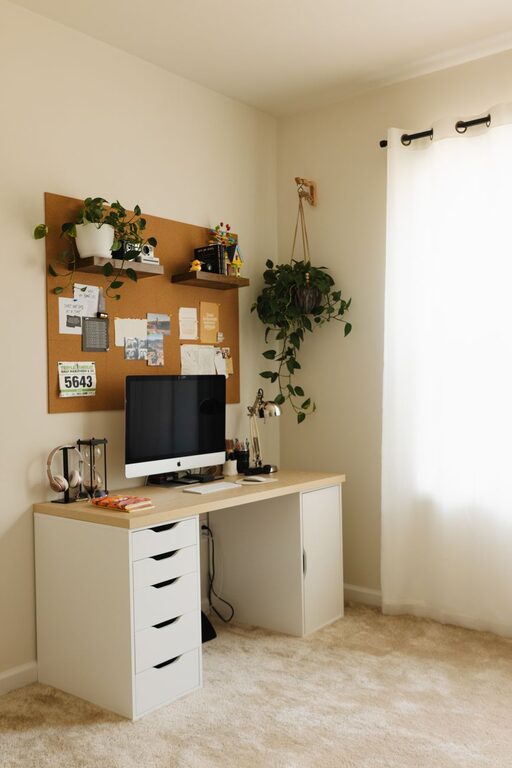
Incorporate items that motivate you, such as artwork, plants, or meaningful objects. Greenery, in particular, has been shown to reduce stress and increase creativity.
Choose calming colors
Colors can influence mood. Soft blues, greens, and neutrals tend to create a peaceful environment, while accents of vibrant colors can inspire energy and creativity.
Optimize Lighting
Layer your lighting
Combine natural light with ambient, task, and accent lighting. A desk lamp with adjustable brightness helps focus on detailed work, especially during early mornings or late evenings.
Avoid glare
Position screens and lights to prevent glare, which can cause headaches and fatigue.
Manage Technology Wisely
Declutter your digital space
Organize files and desktop icons. Use apps or tools that block distracting websites during work hours.
Keep cables neat
Use cable organizers or clips to keep cords untangled and out of the way, which also improves safety.
Establish a Routine and Boundaries
Define work hours
Set clear start and end times to maintain work-life balance. Communicate these hours to family members.
Take breaks
Stand, stretch, or take a quick walk every hour to rejuvenate your mind and body.
Encourage Creativity
Keep a notebook or whiteboard
Capture ideas as they come to prevent forgetting creative sparks.
Change your scenery
If possible, alternate between different parts of your home or even go outdoors to stimulate new ideas.
Final Thoughts
A productive home workspace blends comfort, organization, and personal touch, designed to suit your unique needs. By implementing these tips, you can create an environment that supports both focus and creativity, making your work-from-home experience more successful and enjoyable. Remember, the best workspace is one that feels right for you—don’t hesitate to experiment and adjust as you go!